
What Does a YouTube View Actually Mean?
A YouTube view represents a view of a video that YouTube has counted as legitimate according to its systems.
It sounds simple, but the number displayed underneath a YouTube video does not tell the complete story. Two videos can have the same number of views while having very different levels of watch time, audience retention, engagement and overall performance.
For creators, understanding what the view count represents is important because views are only one part of YouTube's broader measurement system.
Read: Are YouTube Views More Important Than Subscribers?
What Counts as a YouTube View?
YouTube does not simply treat every video request as an automatic view. Its systems evaluate traffic and engagement to identify legitimate viewing activity and prevent artificial or invalid activity from being counted in the same way as genuine audience viewing.
This means repeatedly refreshing a video or attempting to generate views through automated activity does not necessarily result in every request becoming a valid view.
The exact systems YouTube uses to validate views are not publicly exposed in complete detail. This is partly because revealing every detection mechanism would make it easier to manipulate the platform.
Why Does YouTube Have a View Count?
The view count provides a basic indication of how many times a video has been watched under YouTube's counting systems.
It is useful for creators because it gives them a simple performance metric that can be compared across videos.
For example, if one video receives 20,000 views while another receives 500, the difference immediately tells the creator that the first video attracted substantially more viewing activity.
However, creators should not stop their analysis at the view count.
Views Are Not the Same as Unique Viewers
A view count measures viewing activity, while unique viewers estimates how many distinct people watched your content during a particular period.
The difference matters because one person can watch more than one video or return to the same content at different times.
For example, a channel could have 10,000 total views without having 10,000 different people watching its videos.
YouTube Studio provides additional analytics that help creators understand the audience behind their view counts.
Views vs Watch Time
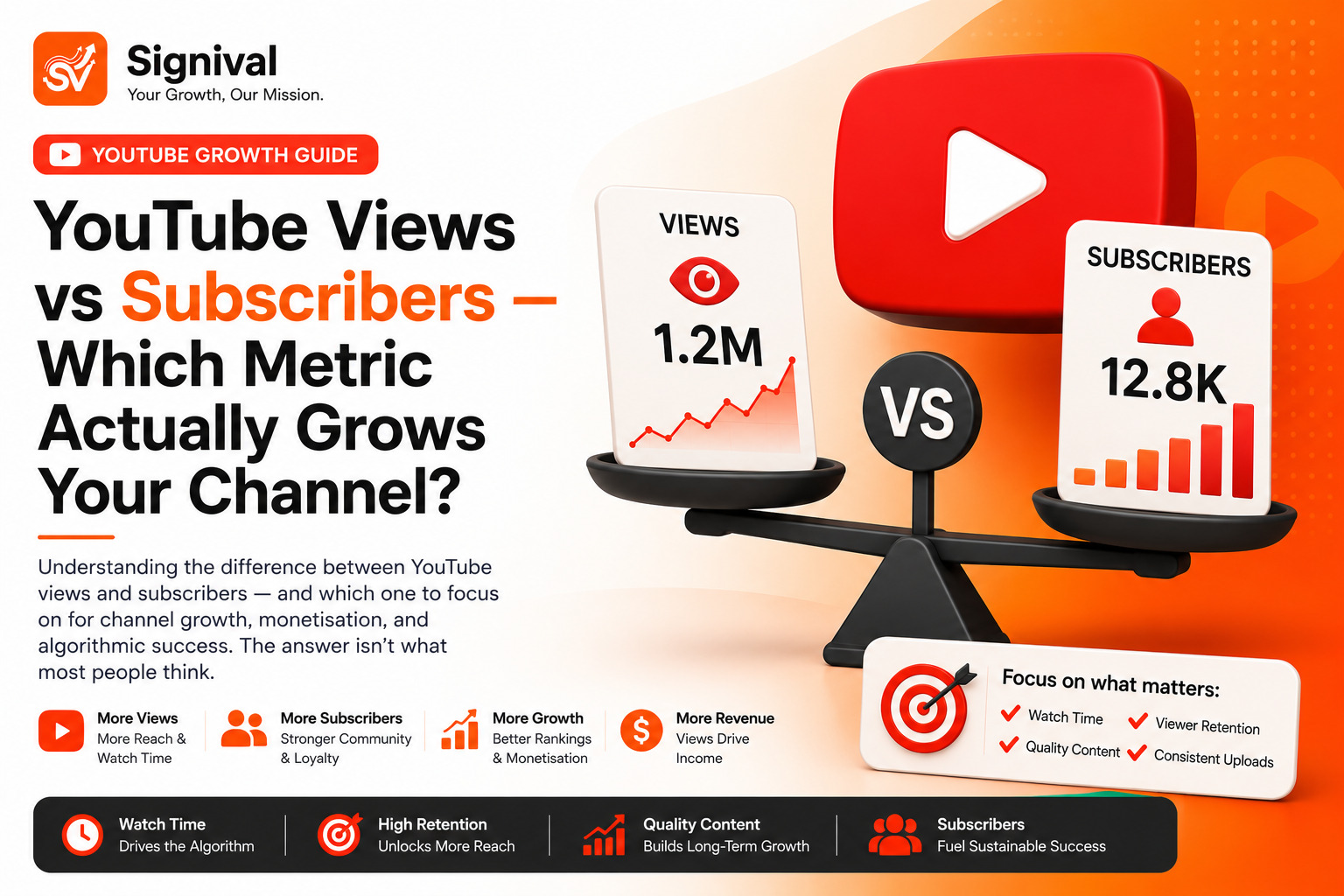
Views tell you how many counted views your videos received. Watch time tells you how much time viewers spent watching your content.
These metrics answer different questions.
A video can have a large number of views but relatively low average viewing duration if people leave quickly.
Another video can have fewer views but generate substantial watch time because viewers watch a larger portion of it.
This is why creators should evaluate both metrics rather than assuming that the video with the highest view count is automatically the strongest video.
Why YouTube Watch Time Matters
Watch time measures the amount of time viewers spend watching your content.
For long-form creators, accumulating meaningful watch time is an important part of building a channel because it reflects whether viewers are actually spending time with the content.
It is also relevant to YouTube Partner Program eligibility, where specific eligibility routes have requirements involving subscribers and valid public watch hours or Shorts views depending on the monetization feature and pathway.
Creators should always check YouTube's current official eligibility requirements because monetization policies and thresholds can change.
Can a Video Get Many Views Without Getting Many Subscribers?
Yes.
A YouTube video can reach viewers who are not subscribed to the channel. Recommendations, search results, suggested videos, external traffic and other discovery surfaces can introduce a video to people who have never previously interacted with the creator.
This is why a channel with a relatively small subscriber count can sometimes have a video that receives thousands or even millions of views.
The reverse can also happen. A channel may have many subscribers while a particular new video receives relatively few views.
Why Some Videos Get More Views Than Others
There is no single factor that guarantees a high YouTube view count.
Topic selection matters because some subjects naturally attract more search and recommendation demand.
The title and thumbnail influence whether people choose to click when the video is presented to them.
Audience retention matters because YouTube can observe how viewers interact with the content after clicking.
Viewer satisfaction, relevance, search behaviour, recommendation systems and the competitiveness of the topic can also influence distribution.
This is why publishing a video is not automatically equivalent to generating substantial views.
What Are Impressions and How Are They Different From Views?
An impression occurs when YouTube displays a video's thumbnail to a viewer in certain places on the platform.
A view occurs when a viewer watches the video in a way that YouTube counts as a view.
The two metrics are therefore connected but different.
A video can receive many impressions but relatively few views if people frequently see the thumbnail without choosing to watch.
On the other hand, a video with fewer impressions can still generate strong performance if a high proportion of the people who encounter it decide to watch.
What Is Click-Through Rate?
Click-through rate, commonly abbreviated as CTR, helps creators understand how frequently viewers click a video after seeing its thumbnail and title in eligible impressions.
A higher CTR can indicate that the packaging of the video is attracting viewers, but CTR should not be evaluated in isolation.
A compelling thumbnail may encourage clicks, but the actual video still needs to deliver what the title and thumbnail promised.
Can You Buy YouTube Views?
Some SMM services offer YouTube view packages. These services are separate from YouTube's organic recommendation system and should not be confused with genuine audience discovery.
Creators using any third-party service should understand exactly what is being purchased and the service's terms before placing an order.
Signival provides YouTube-related SMM services through its dashboard for users who want to manage promotional metric orders, while genuine content quality and audience development remain the creator's responsibility.
Explore YouTube watch hours and subscriber services
Do More Views Always Mean a Better Channel?
No.
A channel's health cannot be accurately judged from its total view count alone.
Creators should also consider watch time, audience retention, returning viewers, subscribers gained, engagement and the performance of individual videos.
For example, 100,000 views with extremely low retention may tell a very different story from 100,000 views where viewers consistently watch a substantial portion of the videos.
How Nigerian Creators Can Read Their YouTube Performance
Nigerian creators should look beyond the headline view number when reviewing their YouTube Studio analytics.
Look at which topics consistently attract viewers, where viewers discover your videos, how long they watch, which videos generate subscribers and which traffic sources produce the strongest audience response.
Over time, these patterns can help you decide what to publish next.
For example, if videos covering one specific topic repeatedly generate higher retention and subscriber conversion than unrelated topics, that may be a useful signal about what your audience wants.
The Bottom Line
YouTube views are important, but they are not the complete measurement of a video's success.
A view tells you that YouTube has counted viewing activity. Watch time tells you how long viewers stayed. Unique viewers provide a better understanding of audience size, while retention and engagement help explain how people actually responded to the content.
The strongest YouTube strategy is therefore not simply to chase a bigger number underneath every video. It is to understand why people watch, keep them watching, and turn that attention into a genuine audience.